
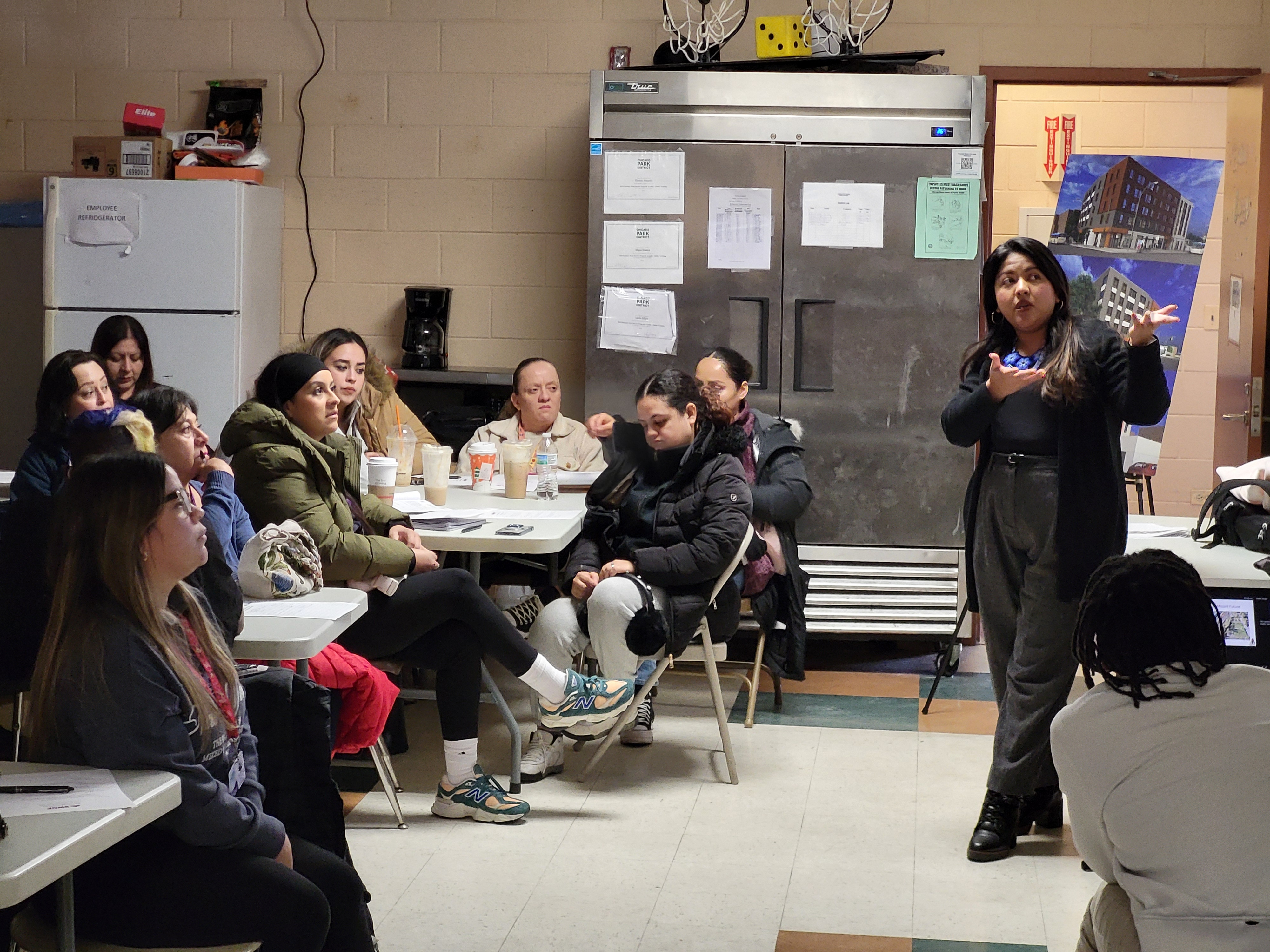
Blanca Casillas’ journey into community-centered development did not begin with blueprints or balance sheets—it began with migration, survival, and a deep awareness of inequity at a very young age. Born in San Francisco, California, Blanca’s earliest years were shaped by her parents’ struggle to make a living in a city that demanded more than two jobs each could provide. When she was just one year old, her parents made the difficult decision to return to their hometown of Tlaquepaque, Jalisco, Mexico. Their plan was rooted in hope: they purchased land and intended to build a home, working when possible and sending money back to continue construction.
After three years, an opportunity emerged that would once again reshape Blanca’s life. A family member invited them to Chicago, sharing stories of affordability and a strong Hispanic community in Pilsen. At four years old, Blanca moved to Chicago with her family—entering a city that would profoundly shape her understanding of community, race, and belonging.
As Blanca grew up in Pilsen, she witnessed firsthand the pressures of gentrification. Rising rents and living costs forced her family to move to Chicago Lawn, yet they continued commuting back to Pilsen for school. Even as a child, Blanca sensed tension—particularly the racism and division between Black and Brown communities—despite having close African American friends. What she initially accepted as “normal” began to feel deeply wrong as she got older.
That discomfort intensified when she was forced to attend school on the North Side of Chicago. The transition was a culture shock. For the first time, Blanca saw stark differences in educational resources, classroom support, and expectations. One moment, in particular, stayed with her. While sharing her academic struggles with a school counselor, she was told she needed to “figure it out herself.” Moments later, a white student entered, and Blanca was dismissed to make room. That experience crystallized the inequities she had felt but couldn’t yet name. Feeling unseen and undervalued, Blanca gravitated back to the South Side—where she felt accepted, understood, and rooted.
After high school, Blanca faced another hard reality. Without access to FAFSA and unwilling to burden her parents financially, college did not feel possible. Instead, she entered the workforce, taking a job at a currency exchange. There, she encountered the deeper suffering of working-class communities—watching people pay what they could toward bills, struggling to stay afloat. It forced her to confront her own internalized shame about the South Side and recognize the truth, that it wasn’t the community that had failed, but the systems surrounding it.
While working downtown at a call center, Blanca found herself surrounded by people who were buying homes and building stability. Encouraged by coworkers and learning about housing affordability at the time, she made a bold move to buy a home in Gage Park at just 21 years old. Though she didn’t end up living in the home and instead rented it out, the experience revealed the power of property ownership and planted the seeds for her future work.
Blanca continued building her skill set, working as a bank teller in which she worked up to Mortgage Loan Processor and later joining a woman-owned scrap metal business. Rising from receptionist to account manager, she felt hopeful—until she realized that being “woman-owned” did not mean equity for women of color. Despite her performance and promotions, she hit a ceiling while others advanced past her. That moment clarified another hard truth for Blanca: “minority white woman” was not the same as being a minority. Determined to reclaim control over her future, she left and started her own real estate business.
As a realtor, Blanca thrived. Her mission was to help low-to moderate-income families understand and use the power of their property. The anger she had carried for years transformed into purpose. She wanted families to have access to information and opportunity that had long been withheld from communities like hers.
That purpose found direction one day while voting, when she met Southwest Organizing Project (SWOP) Organizer Joel Rodriguez outside the polling site. A conversation about a local ordinance turned into a one-to-one meeting, which led her to Harry Meyer, Director of Reclamation at SWOP. As Blanca learned about SWOP’s work, everything clicked. This was what she had been searching for—a way to align her skills, values, and lived experience in service of her community.
As a volunteer, Blanca helped SWOP identify distressed properties and was eventually brought on through the Diverse Developer Fellowship. Entering the developer space required faith as she had little prior exposure—but she trusted SWOP’s community-driven vision. For Blanca, this work was deeply personal. She had once feared that leaving the community meant abandoning it. Now, she saw revitalization as a way to come home.
Through the fellowship, Blanca gained critical knowledge in multifamily financing, HUD funding, and state and federal grant management—resources she hadn’t known existed.
She became a strong advocate for public investment, challenging narratives that oppose affordable housing. “I still don’t understand why some people are against affordable housing,” she says. To Blanca, these investments are pathways for families to live, work, and thrive in their own communities.
Despite the program’s origins in diversity and inclusion, Blanca witnessed shifting political realities and growing resistance. While disappointed, she understood that organizations were trying to protect limited funding. Still, the impact of the work remained undeniable.
“This has been the most impactful role I have ever held,” Blanca reflects. “It aligns perfectly with my values while still giving me the opportunity to provide for my family and give back to my community.”
In just one year, Blanca helped over 50 families process Certificates of Error for property taxes—securing at least $12,000 in refunds per household. She assisted more than 50 families with utility bill assistance, helped 11 families purchase homes, and facilitated $165,192 in grants, along with $65,647 in seller credits—keeping critical dollars in the hands of families who needed them most.
For Blanca Casillas, the numbers matter—but the lives behind them matter more. Her journey, shaped by displacement, resilience, and determination, is a testament to what happens when lived experience meets opportunity. Through the Diverse Developer Fellowship, Blanca is rebuilding trust, stability, and possibility on the Southwest Side she has always called home.


